Easy Braid Tutorials: 10 Braids Step by Step
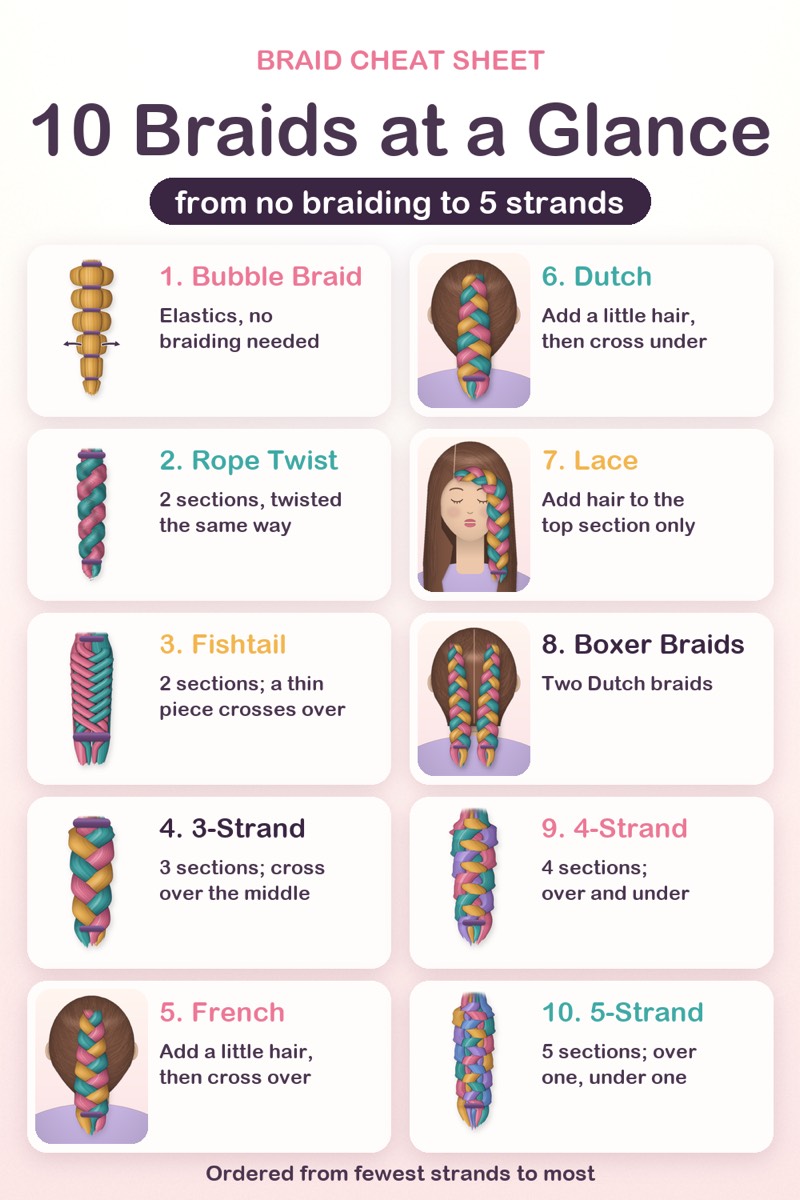
Ten common braids in simple drawings, ordered from fewest strands to most. Most of them use the same crossing move as the classic three-strand braid, so start there if you are new to braiding.
Jump to: Bubble braid, Rope twist, Fishtail braid, Three-strand braid, French braid, Dutch braid, Lace braid, Boxer braids, Four-strand braid, Five-strand braid, which braid is which.
1. Bubble braid
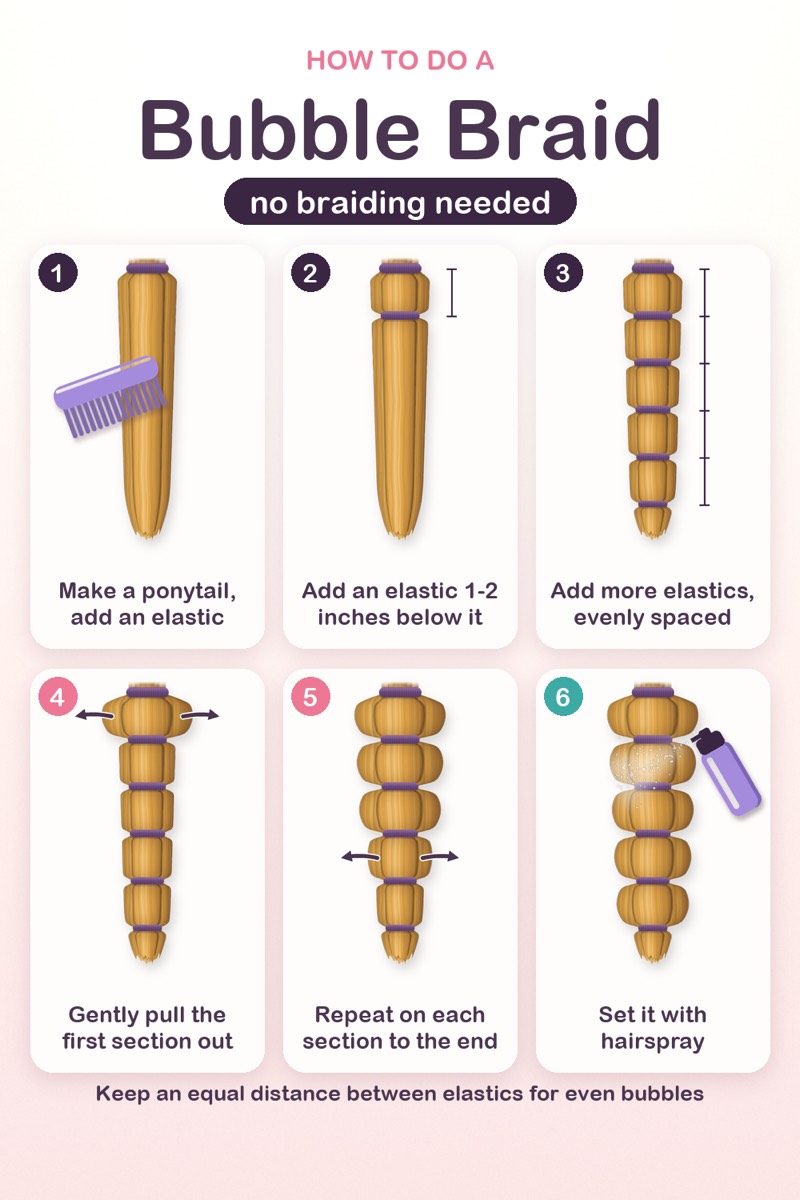
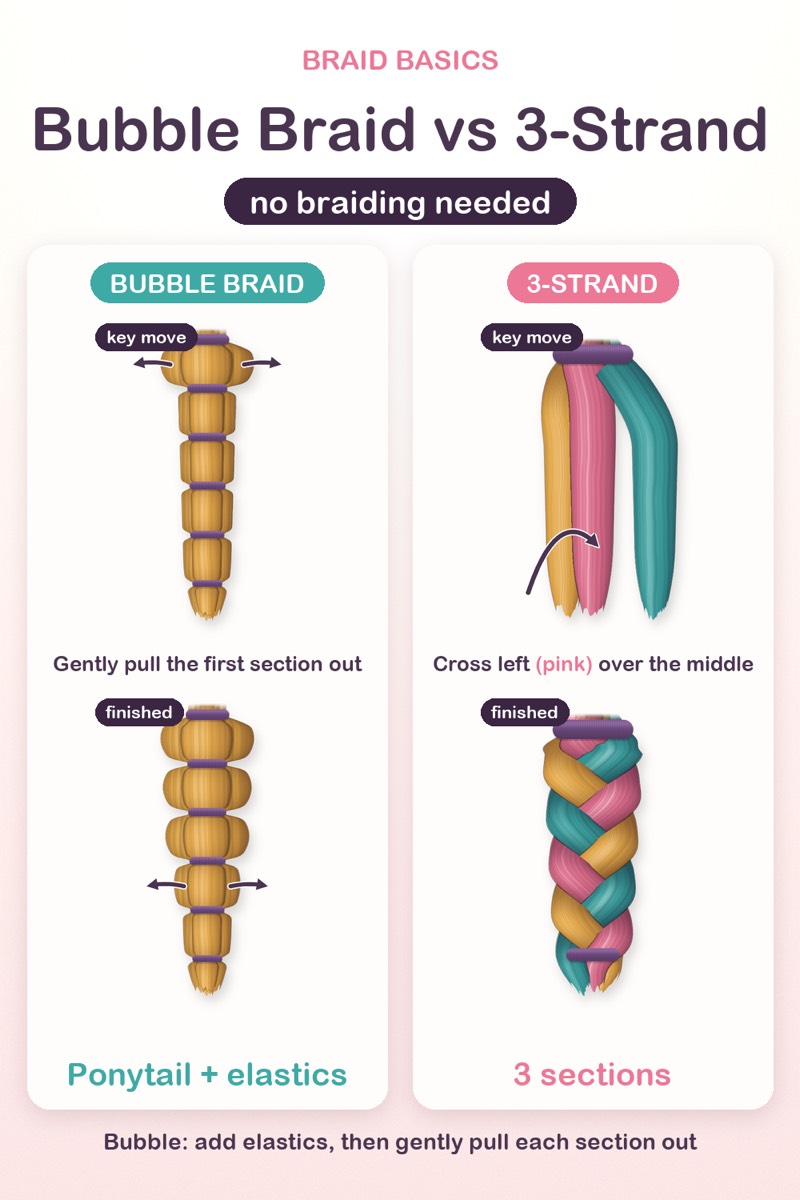
No braiding at all. Tie a ponytail, add small elastics every few centimetres down its length, then gently pull the hair between each pair of elastics outwards to make round bubbles.
2. Rope twist
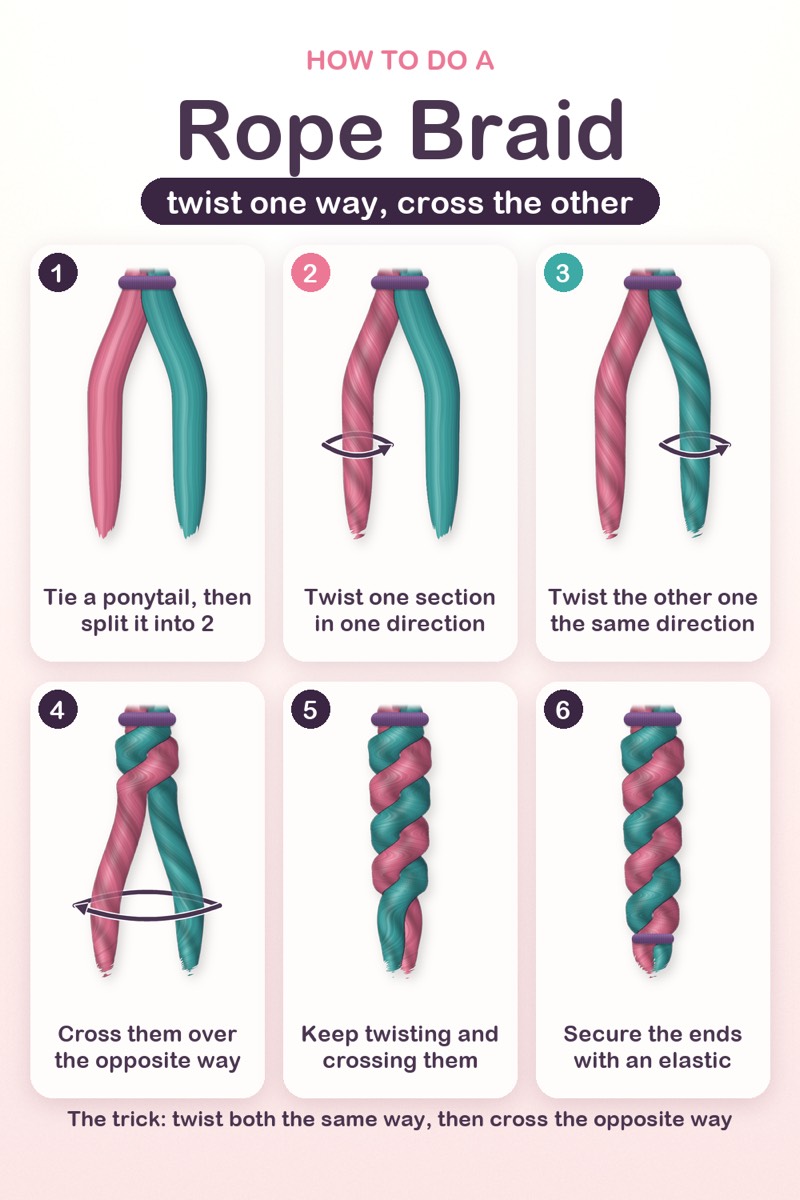
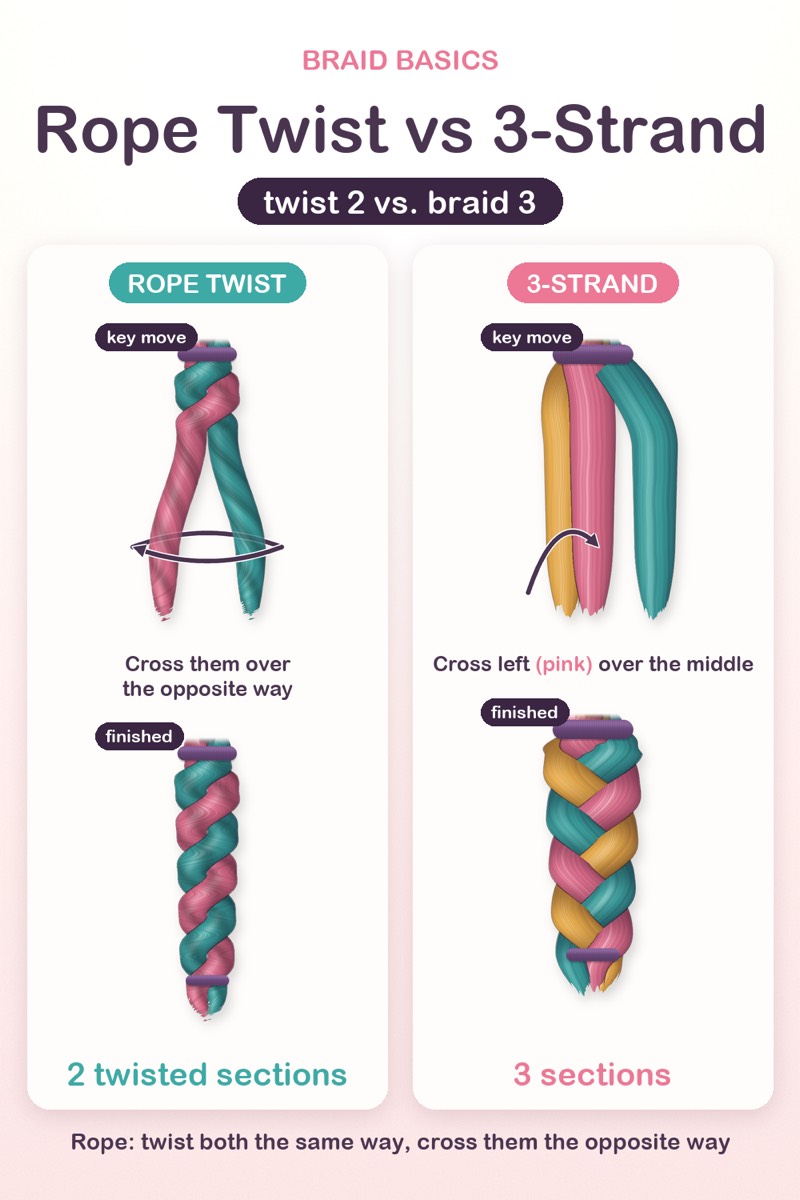
Split the hair into two sections. Twist each section in the same direction, then wrap the two sections around each other in the opposite direction so the twists lock together. Tie off the end.
3. Fishtail braid
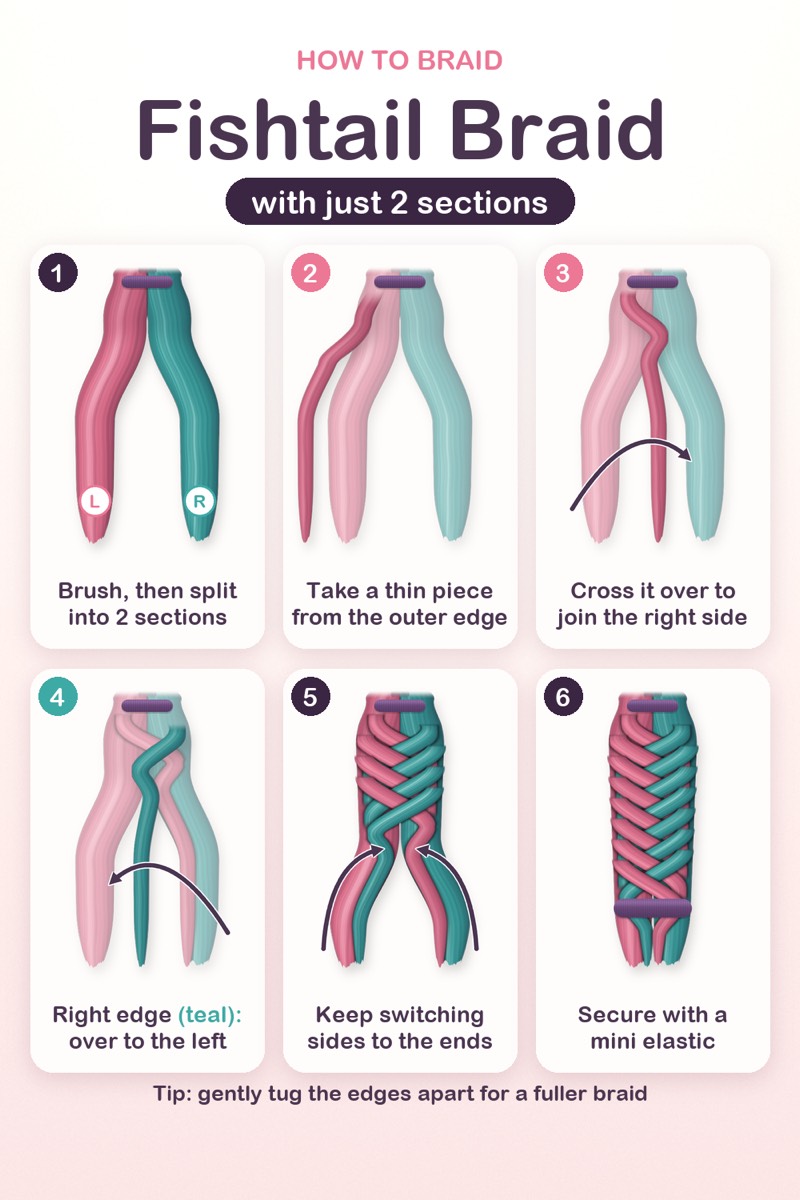
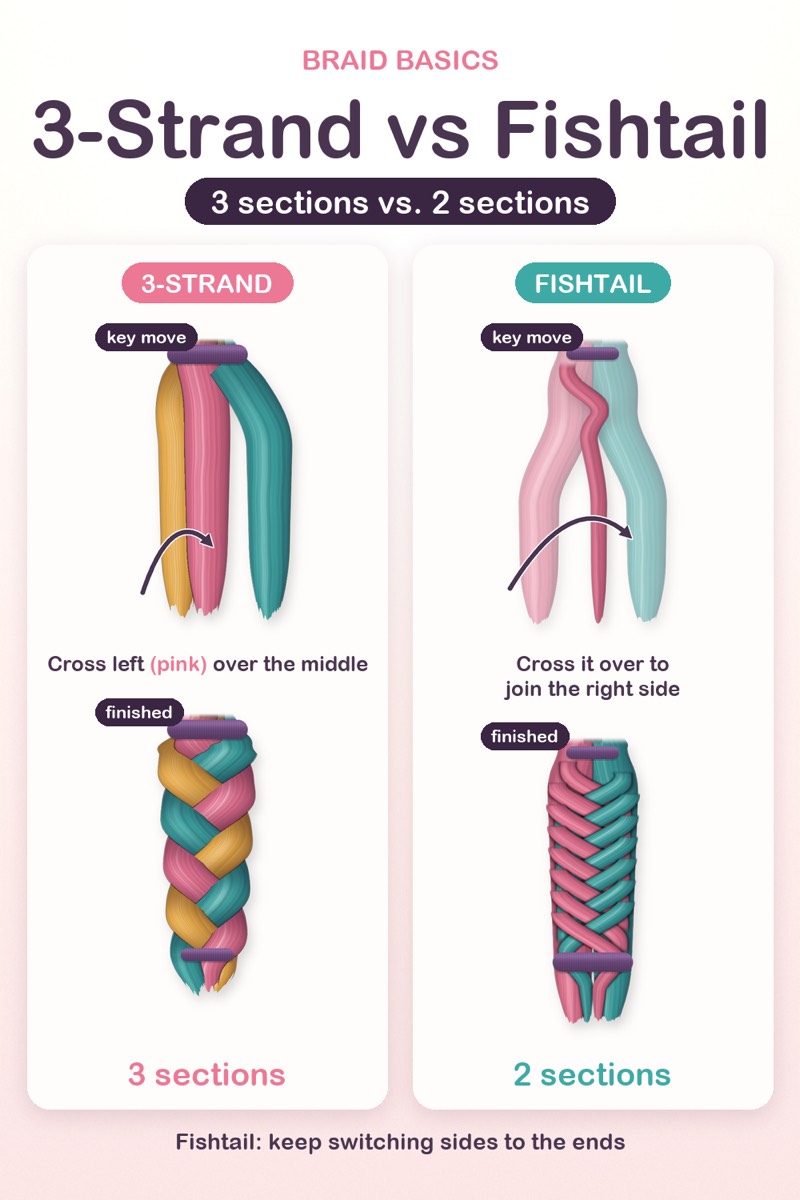
Split the hair into two sections. Take a thin piece from the outer edge of one section, cross it over and add it to the other section, then do the same from the other side. Keep the pieces thin and the same size for a neat pattern.
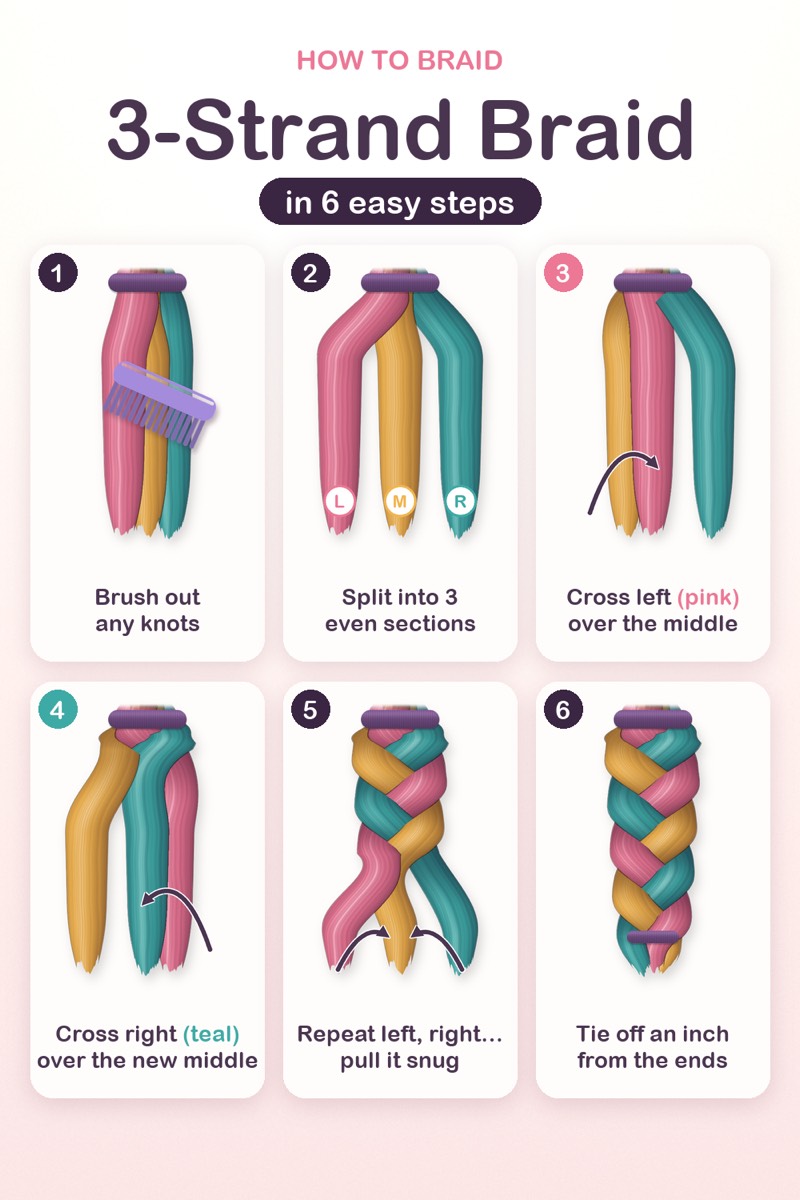
4. Three-strand braid
Split the hair into three even sections. Cross the right section over the middle one, then the left section over the new middle one, and repeat to the ends. Most of the other braids on this page are variations of this move, so it is the one to learn first.
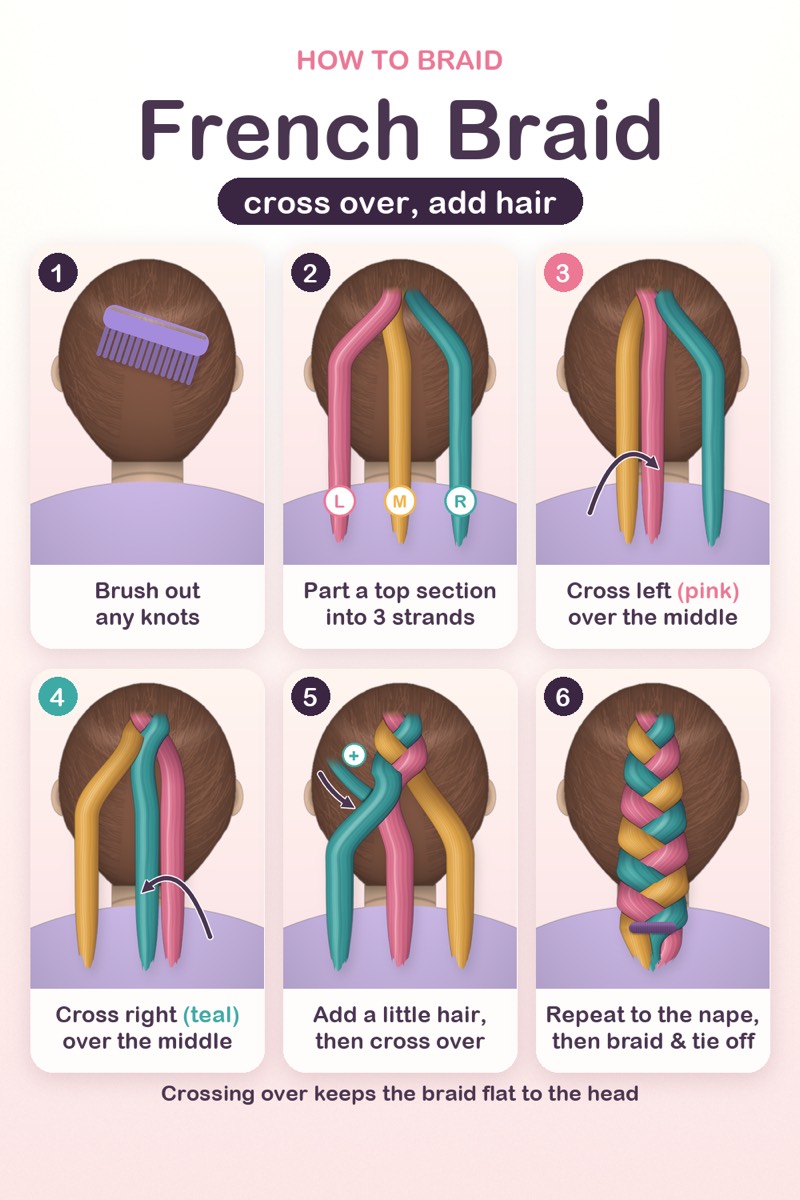
5. French braid
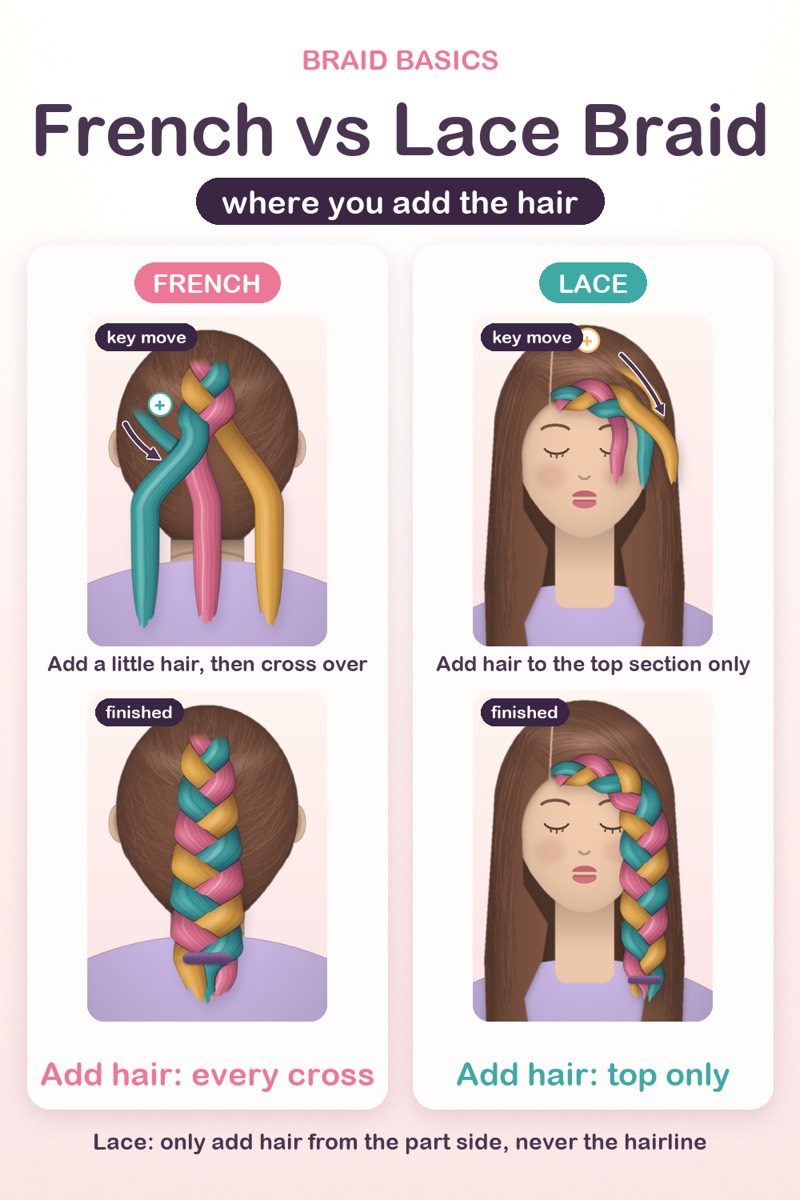
Start with a small section at the top of the head and split it into three. Before each cross, add a little loose hair from that side to the outer section, then cross it over the middle. When there is no loose hair left, finish with a three-strand braid.
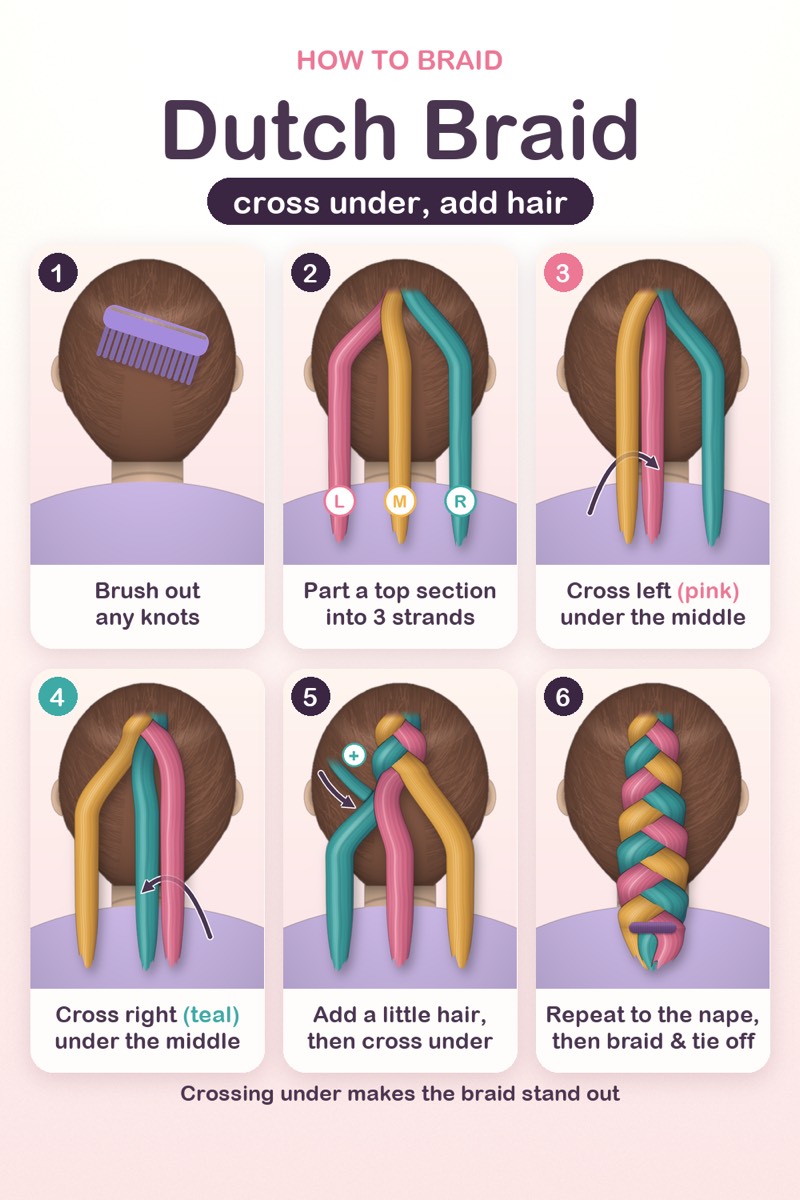
6. Dutch braid
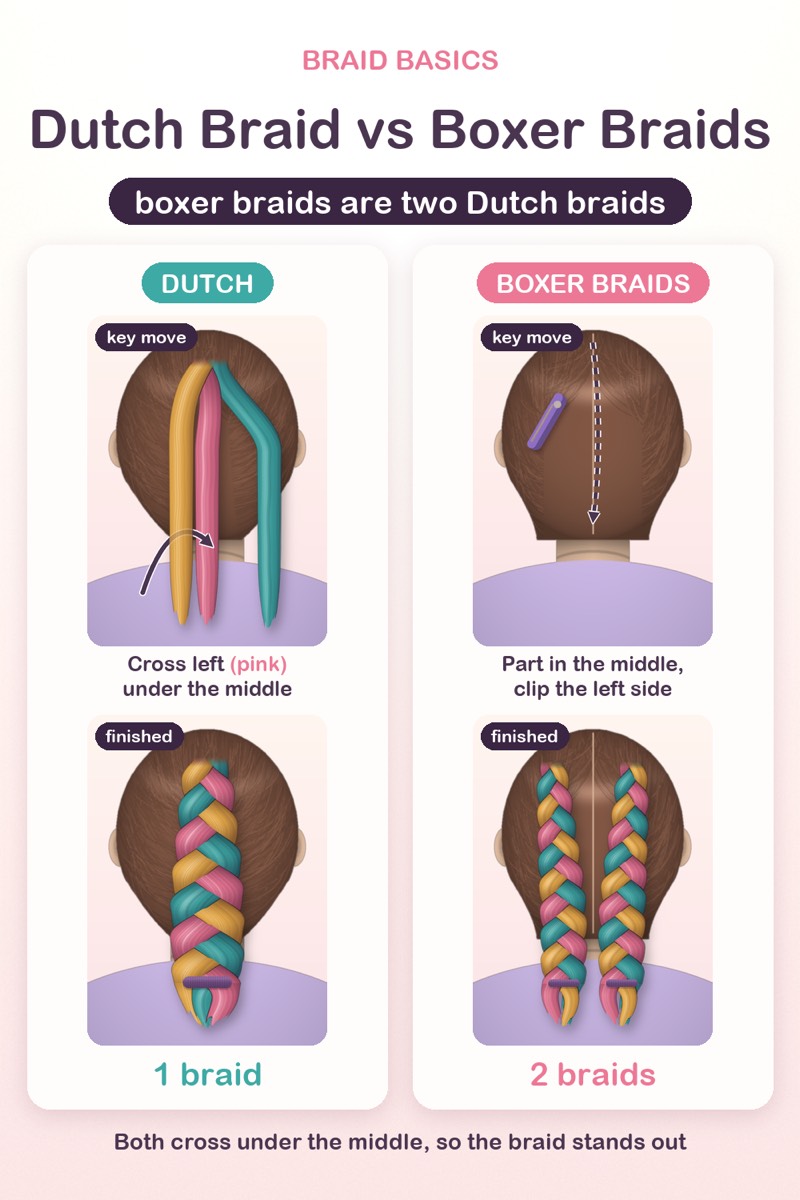
Made like a French braid, except that each outer section crosses under the middle one instead of over it. That makes the braid sit on top of the hair, so it looks raised.
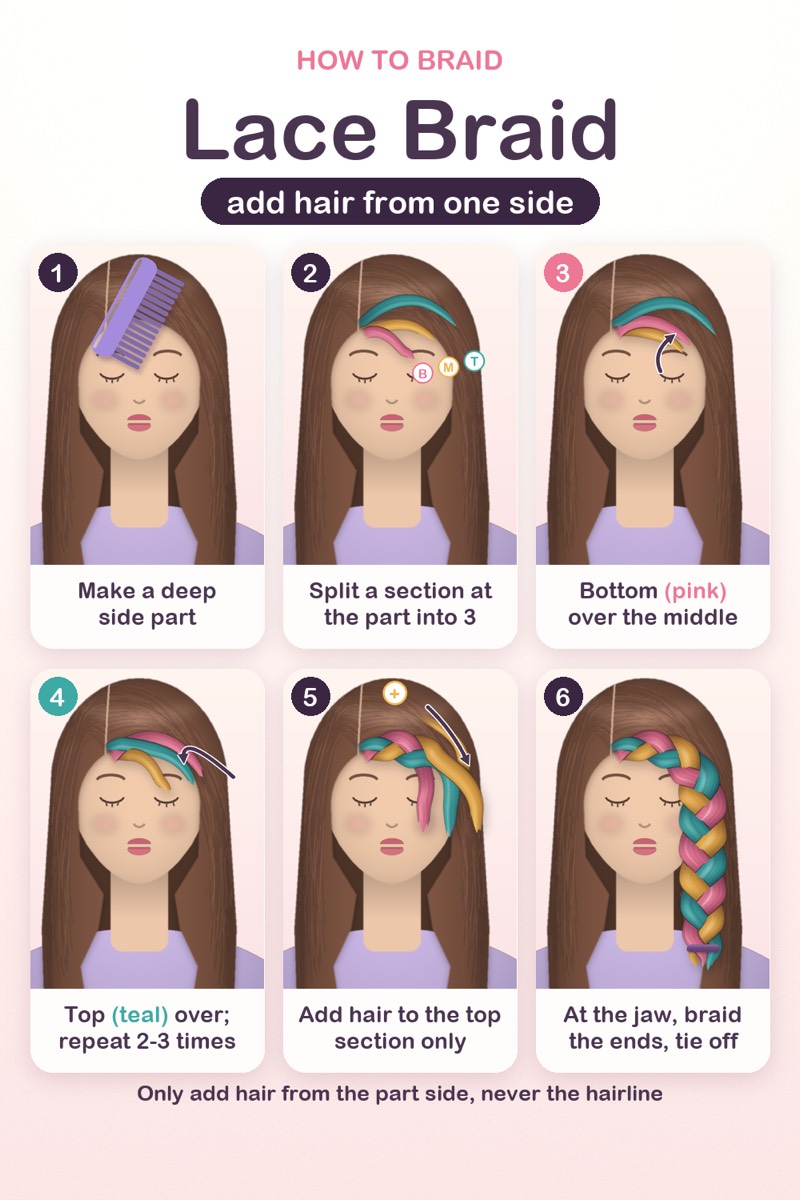
7. Lace braid
A French braid that adds hair to the top section only, so it can follow the hairline like a headband. The lower section never picks up new hair.
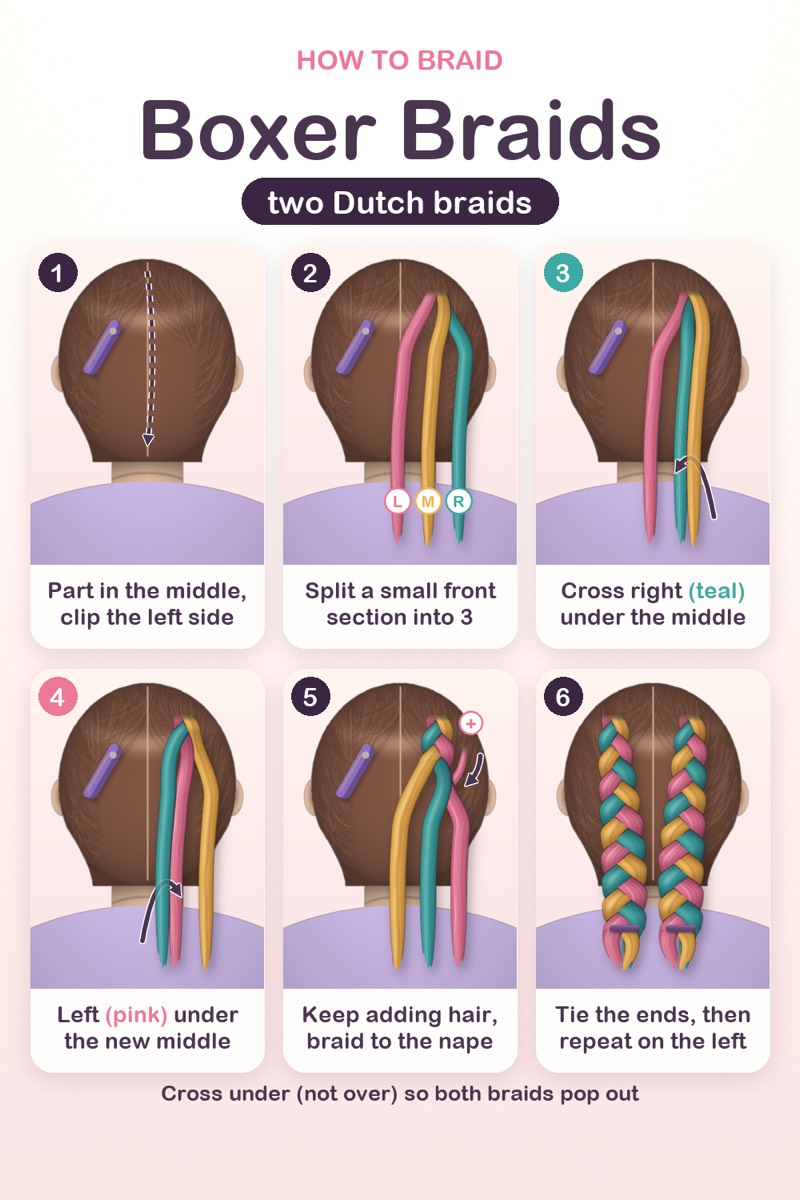
8. Boxer braids
Two Dutch braids, one on each side of a centre parting. Tie off the first braid before you start the second one.
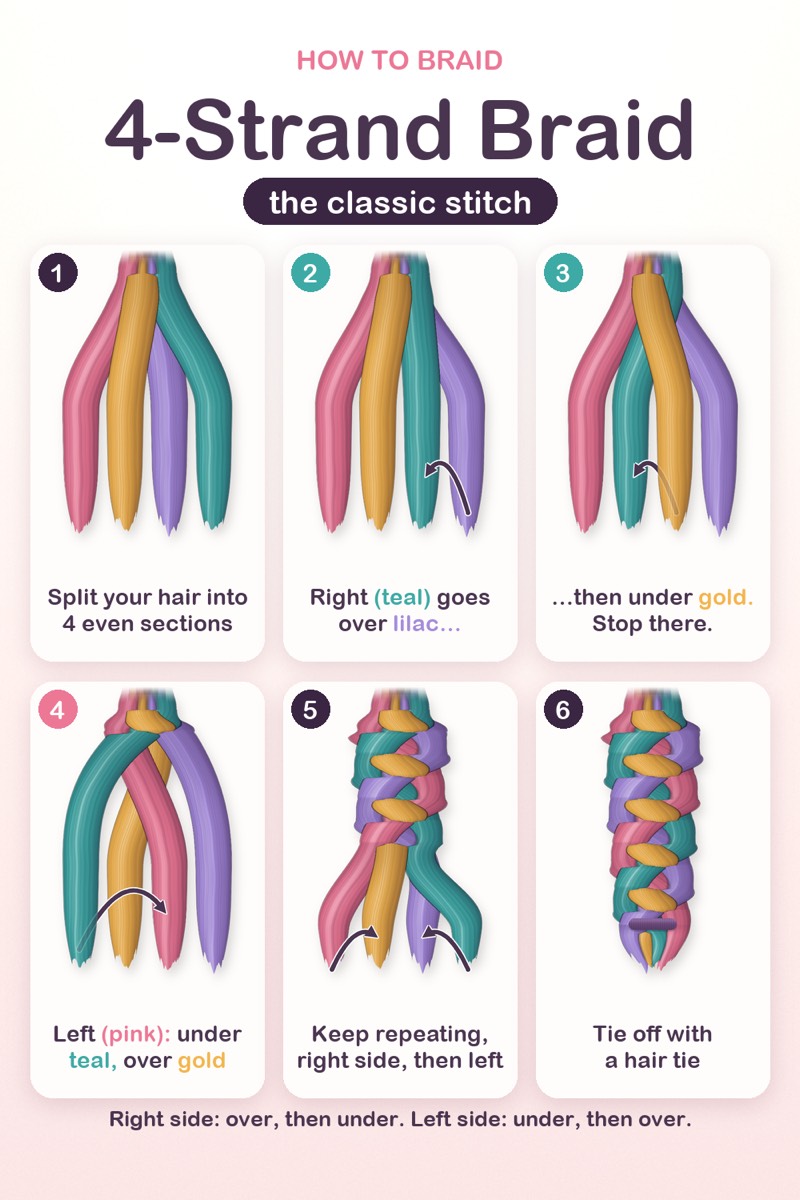
9. Four-strand braid
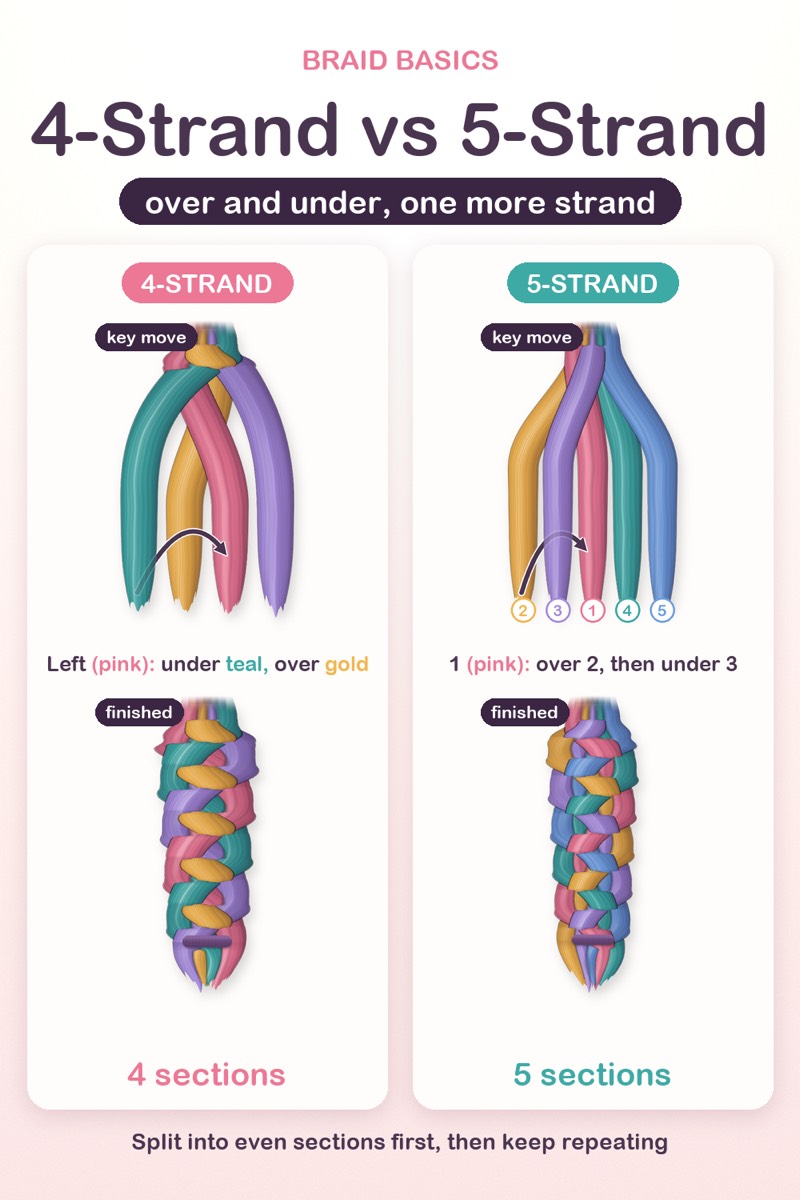
Split the hair into four even sections. On the right, the outer section goes over its neighbour, then under the next one. On the left, the outer section goes under its neighbour, then over the next one. Keep repeating, right side then left side.
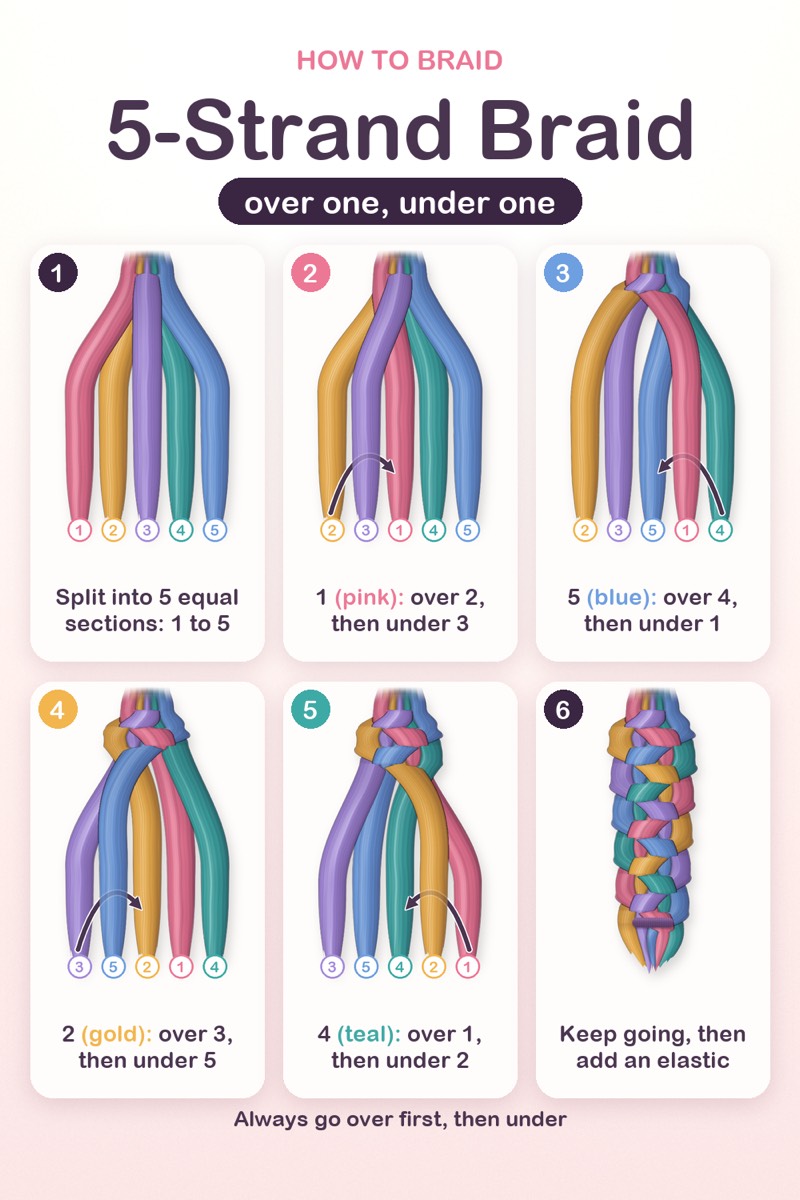
10. Five-strand braid
Split the hair into five even sections. Take an outer section over its neighbour and under the next one, so it ends up in the middle. Then do the same from the other side, and keep alternating sides to the end.
Which braid is which?
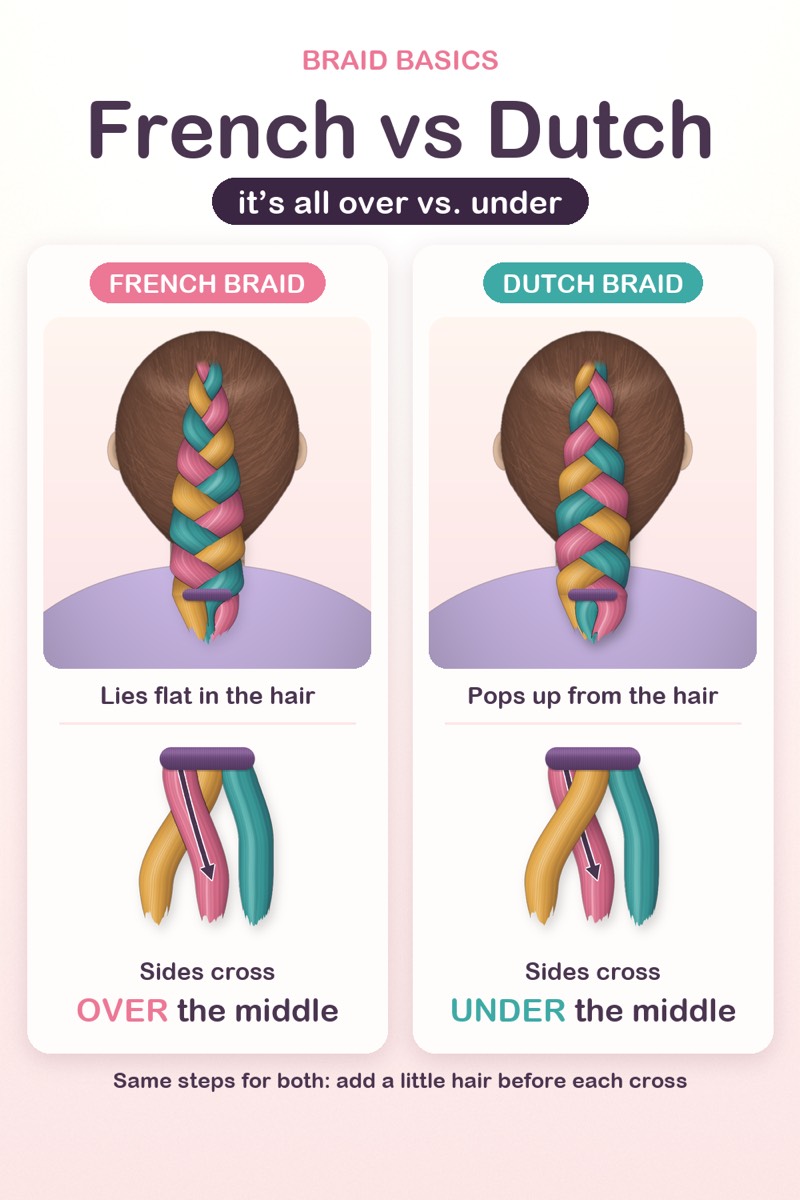
Side-by-side drawings of the braids that are easiest to mix up.
French vs Dutch
The only difference is the cross: a French braid crosses over the middle and lies flat, while a Dutch braid crosses under it and stands out.
Three-strand vs fishtail
Three sections that cross over the middle, compared with two sections that swap thin pieces.
Rope twist vs three-strand
Two twisted sections, compared with three crossed sections.
Bubble vs three-strand
Elastics and pulled-out sections, compared with crossing the sections over each other.
French vs lace
A French braid adds hair on both sides; a lace braid adds hair to the top section only.
Dutch vs boxer braids
One Dutch braid, compared with two Dutch braids side by side.
Four-strand vs five-strand
Four sections, where each side has its own over-and-under order, compared with five sections, where each outer section goes over one and under one.
What you need
- A brush or wide-tooth comb for detangling.
- A tail comb for clean partings.
- Small hair elastics (several for a bubble braid).
- A couple of clips to hold sections out of the way.
The drawings are simplified and not to scale. Last updated 2026-11-22.